
Somatics Exercises
The Un-exercise method
Get Comfortable the Easy, Lazy, Counterintuitive Way
Somatics exercises are easy, gentle focused movements done with a certain level of awareness. Where you are targeting the brain’s motor cortex to Restore Good Feelings.
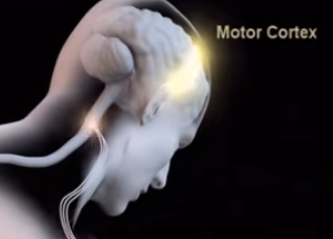
This part of the brain can Reduce Tension and help us Feel More Relaxed.
When neuro-muscular tension levels are reduced, Greater Range of Motion naturally happens so Natural Flexibility is restored while Pain & Guarding Goes Away.
3 for 1 with Somatics Exercises
1. Since the target is the brain’s motor cortex, somatics exercises fall under the category of motor control exercises which are now proven by the ACP (American College of Physician) to “relieve pain”.
Unlike regular exercise, the focus is more on what you can easily do (or imagine) with light, easy, conscious movement patterns rather than exerting yourself with regular exercise or trying to go for range of motion.
2. Somatics exercises also fall under the category of (MBSR) mindful-based stress reduction which the ACP has also given the green light to "relieve pain".
Be being more mindful about how we move, we gain insight into how we are connected and how the brain wonderfully reduces stress in the tissues.
3. Getting to a relaxed state with exercise might surprise you. Normally, we rev our muscles up to become stronger or we try to stretch our muscles to gain length or go for range of motion.
When we target the brain in a specific manner, the brain can open the gate to relaxation. So when you do a series of this, you become more progressively relaxed.
Thus, somatics exercises fall under the third category of progressive relaxation to "relieve pain".
You’ll probably agree that when you feel more relaxed, life is easier.
The Reverse to Most Approaches: Un-Exercise
This un-exercise approach wakes up the muscles to reclaim the necessary neuromuscular function.
The connection between brain, nervous system, muscles and movement connections gets clarified and improved.
Rather than focusing on strengthening or stretching, somatics exercises help to…
- undo muscular stiffness
- undo muscular tension
- undo pain
- undo negative inflammation
So you can move more freely.
Somatics exercise fills in the gap.
Mindful movement rather than exercise is the bridge to regular exercise, recovery and restoration.
Joints need to be mobile, the muscles flexible and the movement system coordinated
Before we move or exercise, our muscles need to be ready to handle the action.
You can easily remind the muscles of their necessary function in order to move, sit, stand and walk comfortably throughout the day.

After a cat nap or a night's rest, our muscles shorten and can feel tighter.
If we’ve been sedentary for a period of time, such as sitting in front of the computer, then tension can ratchet up its hold.
How healthy vertebrate animals do it
All healthy vertebrate animals prepare themselves for movement first thing in the morning and periodically throughout the day.
The process of what animals with a spine do is called a pandiculation .
This process was identified by Thomas Hanna as the pandicular response and is at the heart of somatics exercises.
Somatics exercises are primarily designed to mimic the pandicular act in order to immediately:
- Decrease any stiffness,
- Improve flexibility naturally,
- and Speed healing.
As a result, people learn how to get out of tension and pain using the brain rather than brawn.
Somatics exercises fosters natural movement rather than isolated movement patterns.
“I joined your on-line course just as I was leaving for Antarctica. It has been WONDERFUL! I am appreciating it so much and learning all the time. I love somatics exercises. THANK-YOU.”
- Karen, Alaska
When you move, you move with your entire being and all your parts are affected.
Somatics exercise helps us develop this awareness of internal connections.
When we can feel or sense these connections, we use that sensory information to self-correct and re-right the nervous system and brain.
Moving mindfully (or with sensory awareness) with effortless ease, lets you tap into increasing the potential of your brain & nervous system.
“Great news – I’ve been doing a lot of cross country skiing here in Minnesota where the weather is cold and clear and the snow sparkly and dry. And my stride and balance are light years ahead of where they were last year at this time! Not to mention my stamina – it’s all pretty effortless and most of all, great fun!Thanks for your good work (and I do practice somatics exercise everyday). Cheers”
- Yvonne, Minnesota
Somatics exercises takes off the edge
This system was primarily set up to help us get over both chronic and acute pain and speed healing & recovery too. It has been formerly around since 1990.
If you love your current exercise or are in pain with your activities, somatics exercises can take the edge off of discomfort and can add another layer, tool or dimension.
Somatics exercise can be a foundation to all of your movement/exercise practices or simply for rediscovering how good it can feel to sit, stand, walk or run.
How is this different than regular exercise?
Regular exercise tends to focus on building muscles, strength, speed or balance.

Somatics exercises targets a different part of the brain (the motor cortex) so the brain resets tension levels while at the same time enlivening the connections between the various layers of muscles and fascia.
How is this different from stretching?
Range of motion is generally the goal of stretching.
You can do traditional type of stretching or dynamic stretching to try to gain length.
With our approach, it’s more about getting the muscles looser through your feel and sensitivity through certain feedback loops.
Range of Motion
Range of motion is accomplished by not going for it with our approach.
While that may sound counter-intuitive, muscular tension levels can change (and be lowered) by reprogramming the brain at the cortical level. As the brain lowers tension levels, then range of motion naturally eases into comfortable length instead of trying to push or or force length.
Counting or Holding Un-Necessary
Rather than counting and or holding to feel a stretch, our aim is to become more intimate with what is happening during the entire phase of a movement, thus there is no need to count or hold for any length of time.
The focus is more on cortically paying attention to how various muscles turn on and turn off during an entire span of movement.
Quality of Motion
Instead of going for range of motion, we are more interested in the quality and feel of how various muscles can work together (or not).
Effortless, comfortable movement happens when the muscles and movement system are in your control so they can coordinate more cohesively.
When the muscles are not working in our favor, we can use that sensory information to rebuild the necessary function so the muscles are back in our control.
Function
Stretching isn’t about getting the muscles more functional. The aim is to simply get longer.
Since the brain sends a message to the muscles to contract, our focus is to become aware of this link and re-establish, rebuild and revitalize the lines of communication from the brain to the muscles.
So by feeling how the muscles and movement system coordinate together, the muscles get a wakeup so their job or function can be maintained or improved.
Another difference
Unlike most upright exercise approaches, our approach is done mostly on the floor (or bed) using easy, gentle movement patterns & a series of movement combinations where you move in safe, comfortable ranges of motion.
You can also simply imagine the movements vividly taking the place and still feel how the brain will make the necessary changes.
Pain is mindfully respected and used to teach us how to use the brain to change so compensations can gently unravel on the way back to a more natural balanced state.
Programming the Brain
Mel Siff, Author of Facts & Fallacies of Fitness has this to say -
"Programming your brain is more important than strength training and aerobics. Central nervous programming must never be neglected at all stages of training".
Somatics exercise can be the backbone of reprogramming and updating the brain and movement system.
Since healthy vertebrate animals do this every day to remain agile and healthy, we the human animal can go about this systematically so we can learn, adapt and remain comfortable for life.
Somatics exercises has helped many people with these conditions return to a vital life.
Experience The Difference and What to Do for Lifelong Comfort!
 Ed Barrera is a Hanna Somatic Educator®, H.S.E. & Holistic Health Advisor, H.H.A.
Ed is the author of Move Like an Animal: Feel Comfortable, Move Well for Life in 3 Simple Steps, Amazon Bestseller in Pain Management & Aging.
His latest book, The 1 Thing to Do to Relieve Pain, Stiffness, Tension & Stress. Now available.
Ed lived with chronic pain and fibromyalgia in his 20's & 30's, so he appreciates the long road out and can help you shortcut your way back to feeling comfortable for life.
Ed has over 20 years of experience, helping people find natural pain relief with somatics exercises which are the complete reverse to most approaches since we use conscious gentle body movements that targets the brain’s motor cortex, resets the nervous system, and provides deeper states of relaxation which leads to a healthy, fully-functional body.
Essentially it's motor control exercises, mindful-based stress reduction and progressive relaxation all rolled into one which now the American College of Physicians are saying is "the first thing to do relieve pain".
Muscle lengthening, recovery, relaxation and control are restored by this "alternative to exercise” approach; plus it's natural pain relief that actually works!
If you're unfamiliar with Somatics, see What is Somatics?, where we define somatics and explain more how this information will help you direct your "well being” toward natural healing and pain relief.